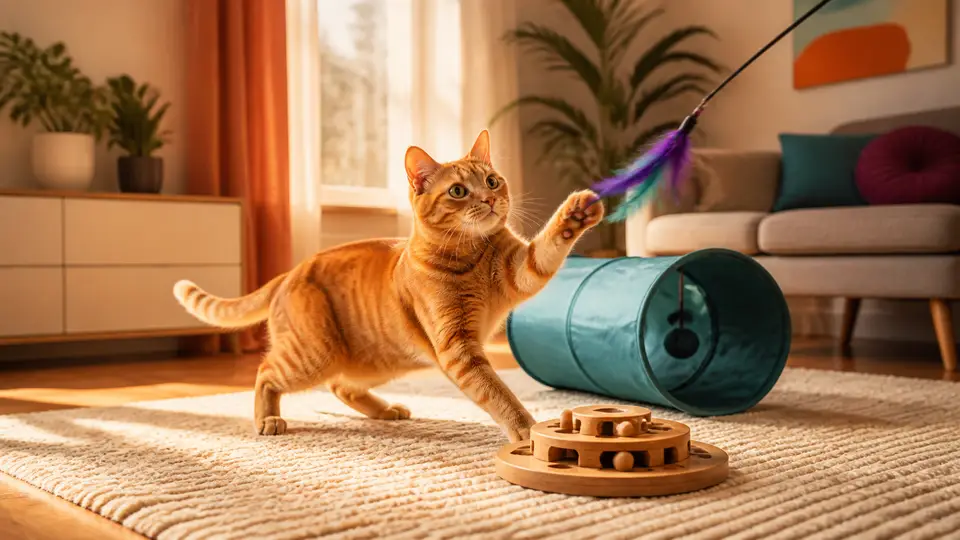
Indoor Cat Exercise Ideas: Keeping Your Cat Active and Healthy
Indoor cats often lack adequate physical activity, leading to obesity, behavioral problems, and reduced quality of life. While outdoor cats naturally exercise through hunting and territory exploration, indoor cats must have intentional enrichment and exercise opportunities. Incorporating regular activity through interactive play, environmental enrichment, and behavioral engagement keeps indoor cats healthy, happy, and mentally stimulated.
Interactive Play Sessions
The most effective indoor cat exercise involves interactive play with their human. Dedicate 15-20 minutes twice daily to wand toy play, mimicking prey movement and triggering hunting behaviors. These sessions provide cardiovascular exercise, mental stimulation, and strengthen your bond with your cat. Cats that receive adequate interactive play show better weight management, improved behavior, and stronger human-cat relationships.
Vary your play style to maintain interest and provide different types of exercise. Fast pouncing games work different muscles than stalking slow-moving prey. Sudden stops and direction changes keep cats mentally engaged. End each session with treats and praise, creating positive associations with play.
Vertical Territory and Climbing
Cat trees with multiple levels encourage climbing, providing exercise while satisfying the instinct for vertical territory. Cats exercising on cat trees burn calories and build strength climbing between levels. Multi-level trees with perches, tunnels, and lookouts provide varied activity engaging different muscle groups. Place trees near windows for additional entertainment through bird watching while climbing.
DIY Exercise Obstacles
Create inexpensive obstacles and climbing challenges using household items. Stack boxes to create climbing challenges. Create paper bag tunnels cats run through. Hide treats in different rooms encouraging exploration and running. Use the hallway for chase games. Cardboard castles with multiple entrances provide climbing, running, and hiding opportunities. These DIY options often entertain more than expensive commercial toys.
Puzzle Feeders and Food Enrichment
Puzzle feeders require manipulation and problem-solving to extract food, providing mental exercise and slowing consumption. Feeding small portions in puzzle feeders throughout the day increases activity and engagement compared to eating from a bowl. Some cats respond enthusiastically to food-motivated enrichment, while others prefer different activities.
Leash Training for Outdoor Exercise
Some cats tolerate leash training, allowing supervised outdoor exploration. Start indoors with a harness and leash, building comfort before attempting outdoor walks. Not all cats accept leashes, and forcing uncomfortable cats creates stress. However, cats comfortable with leashes access outdoor sensory experiences, exploration, and exercise impossible indoors.
Environmental Enrichment
Rotating toys, rearranging furniture, opening windows for bird watching, and providing window perches create environmental interest and activity. Some cats respond to supervised access to screened-in porches providing outdoor stimulation with safety. Changing the environment regularly maintains novelty and engagement preventing boredom-related behavioral problems.
Multi-Cat Households
Cats in multi-cat households often exercise through play interaction with each other. Encouraging inter-cat play through group toys and play sessions increases activity for all cats. However, supervise play ensuring no cat is over-mounted or excessively harassed. Some cats prefer solo play with humans rather than peer interaction.