Understanding Cat Behavior: Why Your Cat Does What They Do
Cats are complex creatures with their own communication styles, emotional states, and behavioral patterns. While dogs wear their hearts on their sleeves with obvious excitement and affection, cats are more subtle communicators. Understanding your cat's behavior is essential for strengthening your bond, recognizing health issues early, and creating an environment where your cat feels safe and content. Many behavioral problems arise simply from misunderstanding what your cat is trying to tell you.
Kneading: Signs of Comfort and Contentment
When your cat rhythmically pushes their paws in and out against your lap, blanket, or cushion, they're engaging in a behavior called kneading. This adorable habit has deep roots in feline development. Kittens knead their mother's belly during nursing to stimulate milk flow. As adult cats, kneading becomes a self-soothing behavior associated with comfort, safety, and contentment. When your cat kneads while sitting on you, they're essentially saying you're their safe place and they trust you completely.
Some cats extend their claws during kneading, which can be uncomfortable for you. If this bothers you, try trimming their nails regularly or gently providing a blanket between you and your cat's paws. Never punish kneading; it's a sign of affection and happiness. Some adult cats never knead, which is perfectly normal; cats have individual personalities and communication preferences.
Purring: Not Always Just Happiness
Most people assume purring means a cat is happy, but the reality is more nuanced. While cats definitely purr when content and relaxed, they also purr when stressed, anxious, or in pain. Purring is a self-soothing mechanism that cats use to manage their emotions. A cat visiting the veterinarian might purr while experiencing fear. A sick or injured cat might purr while in discomfort.
The key to interpreting purring is to look at body language in context. A happy cat has relaxed ears, soft eyes, and a loose body posture. An anxious cat might have flattened ears, dilated pupils, and a tense body despite purring. Pay attention to when and where your cat purrs. Consistent purring during petting and lap time almost certainly indicates happiness. Sudden purring during unusual situations warrants a closer look at your cat's overall wellbeing.
The Slow Blink: A Cat's Declaration of Love
If your cat slowly closes and opens their eyes while looking at you, congratulations, they're telling you they love you. The slow blink is one of the highest compliments a cat can offer. This behavior is believed to have originated from the fact that closing your eyes around another animal is a vulnerable position that demonstrates trust. When your cat slow blinks at you, they're showing they feel safe enough to be vulnerable.
You can return this affection by slow blinking back at your cat. Many cat behaviorists recommend slow blinking before offering your hand for your cat to sniff during greetings. This gentle communication can help build trust and deepen your relationship. Multiple slow blinks in a row suggest your cat is particularly happy or content.
The Zoomies: Why Cats Suddenly Go Wild
You've probably witnessed it: your calm, dignified cat suddenly tears through the house at top speed, bouncing off furniture and walls like they've completely lost their mind. These episodes, called the zoomies or "frenetic random activity periods" (FRAPs), are completely normal, especially in younger cats. They're essentially bursts of excess energy that cats need to release, similar to how humans might go for a run or exercise session.
The zoomies often happen early morning and late evening, when wild cats would naturally hunt and be most active. Indoor cats experience the same instinctive energy surges. Rather than trying to prevent zoomies, embrace them as signs your cat is healthy and playful. Provide safe spaces for running, vertical territory for climbing, and interactive toys that allow your cat to expend this energy in positive ways. After a good zoomies session, you'll often find your cat collapsing into a satisfied nap.
Scratching: Not Just Destructive Behavior
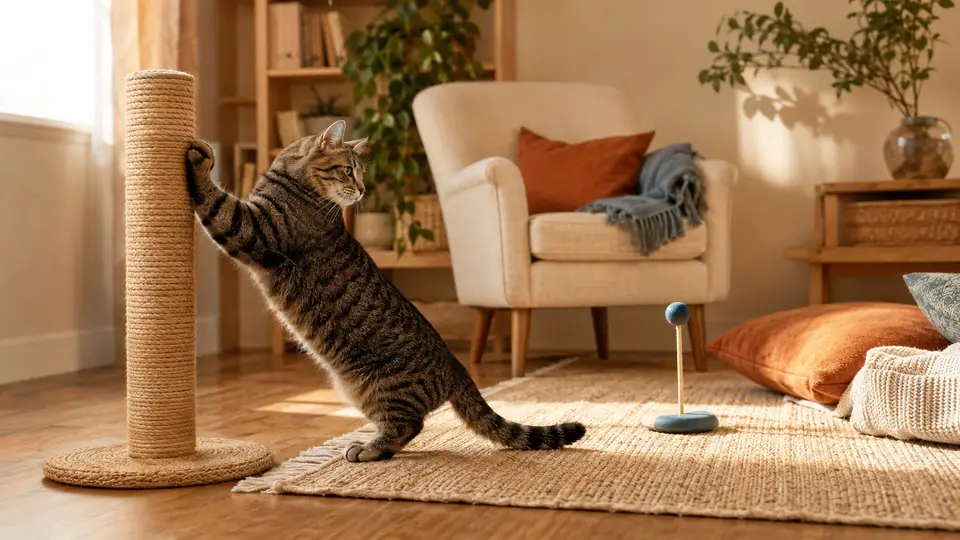
When your cat scratches furniture, they're not trying to ruin your belongings or sharpen their claws exclusively. Scratching serves multiple important functions for cats. It removes the outer sheaths of claws, leaving sharp new points underneath. It stretches their muscles, similar to a cat yoga session. Most importantly, scratching marks territory by leaving scent glands at the scratched spot, which is how cats communicate ownership and comfort to other cats and themselves.
Scratching is a necessary, healthy behavior that cannot and should not be suppressed. Instead, provide appropriate scratching surfaces like scratching posts, pads, and cardboard scratchers. Place them near areas where your cat likes to sleep and in high-traffic areas. Some cats prefer vertical scratchers, while others prefer horizontal or angled surfaces. Experiment to learn your cat's preference and reward scratching in appropriate places with treats and praise.
Hiding: Understanding When Your Cat Needs Space
Cats are natural predators who hide to avoid becoming prey. Even well-fed housecats retain this instinct. When your cat hides under the bed, in closets, or behind furniture, they're creating a safe space where they feel protected and in control. Some hiding is completely normal, especially during stressful situations like thunderstorms, fireworks, or when visitors are over.
However, excessive or sudden hiding can indicate stress, illness, or pain. A cat that normally socializes but suddenly hides for extended periods should be evaluated by a veterinarian. Creating hiding spots (tall cat trees, enclosed beds, or cardboard boxes) gives your cat control and confidence. The ability to choose when and how to interact improves your cat's sense of wellbeing and can reduce stress-related behavior problems.
Building Better Communication With Your Cat
Understanding these behaviors is the foundation of a strong relationship with your cat. Pay attention to your individual cat's unique personality and communication style. Some cats are chatty and vocal; others prefer silent communication through body language. Learn to recognize the signs of stress, contentment, fear, and affection specific to your cat. This knowledge will help you be a more responsive, attentive cat parent who can better meet your feline friend's needs and enjoy a deeper bond.